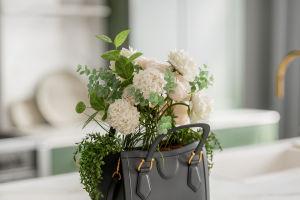
A handbag can combine everyday practicality with personal style. Its silhouette, capacity, handles, and straps influence how it looks, how it is carried, and where it fits into a wardrobe.
Some designs prioritize generous storage, while others focus on portability and a streamlined appearance.
Knowing the main handbag types makes it easier to choose a design that matches an outfit, occasion, and daily needs.
Tote Bags for Spacious Carrying
Tote bags are defined by their open, spacious construction and two handles. Their generous capacity makes them useful when several belongings need to be carried throughout the day.
Their appearance can range from relaxed and flexible to structured and refined. With different sizes, materials, and finishes available, totes can complement a wide variety of everyday wardrobes.
Top-Handle Bags for a Refined Look
Top-handle bags feature handles attached near the upper edge, allowing them to be carried by hand. Many designs have defined shapes that create a polished and organized appearance.
Some also include a detachable shoulder strap, providing another carrying option when greater flexibility is preferred. This combination allows the same bag to work across different settings.
Crossbody and Shoulder Bags
Crossbody bags have a long strap designed to run across the body. This carrying position keeps the hands free and can be convenient during activities that involve walking or movement.
Shoulder bags are designed to rest on one shoulder and come in a broad range of shapes and capacities. Smaller versions offer a streamlined option, while larger designs provide additional room for everyday belongings.
Clutches for a Minimalist Finish
Clutches are compact handbags primarily designed for hand carrying. Their smaller proportions make them suitable when only a limited number of essentials are needed.
Their designs can be understated or decorative, making a clutch an effective choice when the handbag is intended to complement rather than dominate an outfit.
Hobo and Bucket Bags
Hobo bags are recognized by their soft, curved silhouettes. Their flexible construction gives them a relaxed appearance, while many designs provide enough interior space for everyday carrying.
Bucket bags have a distinctive deep body with a rounded or cylindrical profile. Drawstring closures are common, although other fastening styles are also used. Their distinctive structure gives an outfit a noticeable accessory without relying on excessive detailing.
Belt Bags and Mini Bags
Belt bags are compact designs intended for hands-free carrying. Depending on their construction, they can be positioned around the waist or worn across the body, making them practical when freedom of movement is important.
Mini bags take familiar handbag silhouettes and reduce them to a much smaller scale. Their limited capacity makes them best suited to a few necessities, while their proportions give them a distinctive fashion-forward appearance.
How to Choose the Right Handbag
Choosing a handbag begins with identifying its intended purpose. A tote is well suited to days when additional capacity is needed, while a crossbody can be convenient when mobility is a priority. A top-handle bag offers a more structured appearance, whereas a hobo provides a softer silhouette.
It is also useful to consider capacity, carrying method, structure, and overall proportions. A handbag that fits the intended routine is more likely to be comfortable and useful, while the right silhouette can enhance the balance of an outfit.
Handbag styles differ in shape, capacity, construction, and carrying method, giving each category a distinct role. Totes prioritize space, crossbody bags emphasize hands-free convenience, top-handle designs offer structure, and compact styles provide a lighter approach to carrying essentials.
By understanding these differences, it becomes easier to select handbags that combine practical requirements with personal style and work naturally across different occasions.