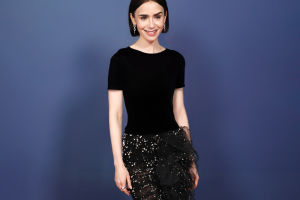
Some stars are closely associated with one particular period of their careers. Others keep finding new ways to remain visible as the years pass.
Norika Fujiwara belongs to the second group.
She first became widely known after winning the 1992 Miss Japan Grand Prix while she was a university student in Kobe. She then worked as a fashion model before moving into acting, television, stage performances and hosting. Over the years, she has also taken on voice roles, international projects and humanitarian work.
That range is part of what makes her career interesting. Fujiwara has not simply tried to preserve the image that made her famous in the 1990s. She has continued adding different kinds of work to it.
From Modeling to Acting
Fujiwara's early success gave her visibility, but modeling was only the beginning.
After graduating from university, she moved from fashion modeling into acting and television. Her career includes dramas such as Naomi, Star no Koi, Dangerous Relations, Mukashi no Otoko and O-oku. She also developed a career on stage and as a presenter.
Her work later expanded into voice acting, including the Japanese voice of Princess Fiona in the Shrek films. She has also appeared in stage productions and continued taking on different kinds of entertainment work as her career developed.
That variety says something important about longevity. Being successful in one area can open a door, but staying active often means being willing to explore several different ones.
Fujiwara's career offers a good example of that approach. She moved beyond modeling without abandoning the experience and visibility it gave her, gradually building a broader career across television, film, theater and voice work.
Taking New Roles Seriously
One of the clearest patterns in Fujiwara's career is her willingness to keep learning.
Her work has moved between very different formats. A television drama requires a different kind of performance from a stage musical, while voice acting demands another set of skills altogether. Her filmography includes dramatic roles, international productions and voice performances, including Princess Fiona in Shrek, Shrek 2 and Shrek Forever After.
More recently, she has continued appearing on stage and in films. Her work has included productions such as Carmen Returns Home and the stage production The Trap.
That kind of career requires more than simply being recognizable. Different productions bring different schedules, directors, audiences and expectations.
For Fujiwara, continuing to accept different kinds of work has been an important part of remaining professionally active. Instead of treating her early success as the destination, she has continued treating it as a starting point.
Beauty, but Not Only Beauty
Fujiwara has spent much of her career in an industry where appearance receives constant attention. Yet she has also spoken about beauty in a surprisingly practical way.
In a 2020 interview, she pushed back against the idea that she looks perfect every day, joking that there are mornings when even she feels that she is having a bad day. She explained that what matters more is being able to switch into a focused state when she has a job or goal ahead of her. She connected that mindset not only with beauty and fitness but also with preparing for roles and other professional work.
That distinction makes her approach more interesting.
Instead of presenting beauty as something that simply exists, she talks about the process behind getting ready for work. There is a professional side to maintaining an appearance, just as there is a professional side to preparing for a performance.
Her attitude also leaves room for ordinary days. That makes her public image feel less distant. Looking polished on camera does not mean looking perfect every moment of the year.
Staying Active as the Years Change
Fujiwara has also been open about the routines she uses to maintain her energy.
In a 2022 discussion about health management, she said exercise was essential to her routine. She mentioned flexibility work, gym sessions, suspension training and pressure-based training, along with paying attention to seasonal ingredients when preparing food at home.
Her interest in health has developed further. In 2026, she discussed her long-term beauty and wellness habits, including having attended beauty pressure-training sessions for more than 20 years. She also explained that during the COVID-19 pandemic she studied warming and wellness practices and obtained qualifications related to them.
Whether or not someone wants to copy those particular routines, the broader lesson is easy to understand: Fujiwara treats physical preparation as part of her working life rather than as a temporary project.
That makes sense for someone whose career has included demanding stage performances as well as television and film.
Finding a Bigger Role Beyond Entertainment
Perhaps the most interesting part of Fujiwara's career is that her public work eventually extended well beyond entertainment.
The 1995 Great Hanshin-Awaji Earthquake had a major influence on her decision to become involved in humanitarian activities. She later became involved in international humanitarian projects, traveling overseas to learn about local communities and support causes related to children's education and environmental protection.
Her involvement was not limited to attaching her name to a cause. For example, she traveled to Afghanistan and organized photography exhibitions to share what she had seen. She later had photographs taken in East Timor displayed at the United Nations headquarters.
This gives her career another dimension. Fame provided a platform, but she gradually used that platform for purposes outside entertainment.
It also helps explain why her career cannot easily be reduced to modeling or acting. She has spent decades moving between professional performance, public communication and social causes.
A Career Built on Change, Not Reinvention
Fujiwara's longevity does not seem to come from repeatedly creating a completely new public identity.
Instead, she has added new layers to an established one.
The model became an actress. The actress took on theater and voice work. The television personality became involved in international projects and charity. More recently, her interest in health and wellness has become another visible part of her public work.
That is a useful distinction. Reinvention can attract attention, but evolution can be more sustainable.
Fujiwara's career suggests that staying relevant does not necessarily mean chasing every new trend. Sometimes it means keeping the qualities that already work while being willing to learn something different.
And perhaps that is the quieter reason she has remained recognizable for so long. Her career has changed considerably since her Miss Japan victory in 1992, but she has continued to find new places for herself within the entertainment world and beyond.
Her story is less about preserving youth than about continuing to participate. The face may remain familiar, but the work keeps moving forward.